
Three Studies Shaping Our Thinking About Adolescence
From youth workers to digital civic life, new research highlights a simple idea: The conditions we create shape what’s possible for young people.

Adolescence is an important time of discovery, when young people begin to make sense of who they are, what they care about, and where they belong. It’s also a time shaped by the relationships they build and the systems around them. These influences can open doors and set paths that last well into adulthood. To better understand how young people grow and learn during adolescence, from the ages of 9 to 18, we look to research across the field.
While each of the studies below explores a different dimension of adolescence, from youth work to digital civic life to civic learning, they point to a shared insight we see across our work: When we invest in young people, we must also invest in the environments around them. The conditions we create matter, and they shape what’s possible.
Three publications in particular have informed Jackie Bezos Researcher in Residence Andrew Nalani’s thinking around adolescence this year, and we asked him to share more about each.
STUDY NO. 1
The Often-Invisible Work of Youth Workers
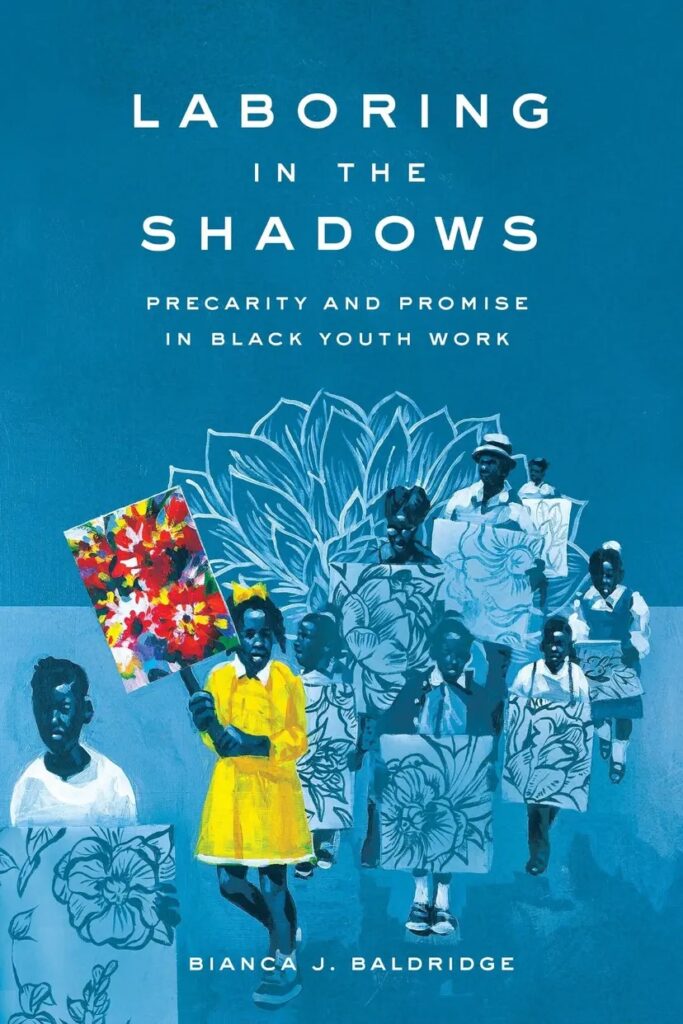
In her recent book Laboring in the Shadows, Harvard scholar Bianca Baldridge shines a light on the essential, but often overlooked, work of youth workers, including those serving young people in Black communities.
Youth workers mentor, guide, and advocate for adolescents in community spaces every day. Yet their work often unfolds under conditions that are uncertain, underfunded, and undervalued. Baldridge’s research highlights the invisible labor that youth workers perform to build trust with young people and create spaces where they can explore identity, relationships, and belonging.
For many in youth development, conversations about program quality have focused on improving youth outcomes, strengthening curricula or expanding programming. Baldridge’s work reminds us that the conditions of youth workers themselves are a critical part of program quality. If the adults supporting young people are not well supported, it becomes much harder to sustain the relationships that help youth thrive.
The book also recognizes youth work as essential social infrastructure, and centering youth workers’ voices in research, governance, and funding decisions is an important step toward building stronger systems for young people.
STUDY NO. 2
Understanding Civic Life in a Digital World
A new study by Yue Ni and colleagues introduces the Multi-Dimensional Online Civic Engagement for Youth Scale (MOCE-Y), the first comprehensive tool designed to measure how young people participate civically in digital spaces.
Rather than focusing only on traditional political participation, the scale captures what youth actually do online: sharing information, creating content, interacting with others, and organizing around issues they care about. The researchers also designed the scale with direct input from teens and young adults, ensuring that it reflects real experiences rather than adult assumptions.
The findings suggest that online civic engagement is multidimensional. It includes online literacy, content creation skills, interaction with others, and civic behaviors like sharing information or mobilizing peers.
Importantly, digital civic spaces can create both opportunities and challenges for young people’s well-being and civic identity. One promising finding is that strong critical online literacy skills, like evaluating information and recognizing misinformation, appear to support healthier and more constructive forms of engagement.
The multidimensional online civic engagement for youth (MOCE-Y) scale: development and validation
by Yue Ni and colleagues
February 2026

STUDY NO. 3
Learning Democracy by Practicing It
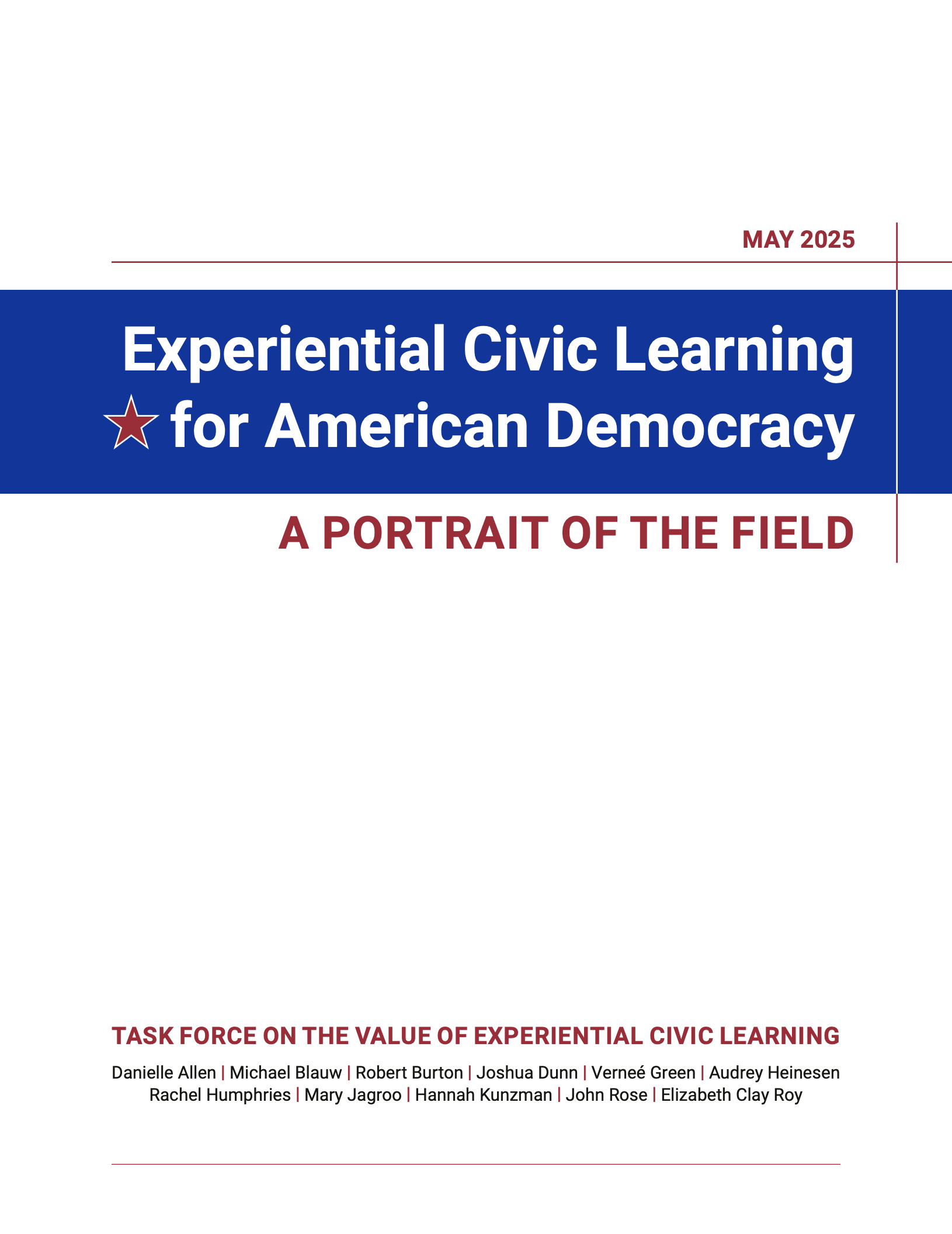
A third publication focuses on how young people develop the civic skills they need to participate in democracy: The 2025 white paper led by Danielle Allen and colleagues introduces a shared framework for what researchers call experiential civic learning. The core idea is simple. Young people learn civic competencies and democratic dispositions best when they have meaningful opportunities to practice them.
These opportunities can take many forms, for example, joining a community project, stepping into a simulation of democratic decision-making, or working alongside peers to take on real challenges in their communities. Through experiences like these, young people build the skills that help them listen deeply, think critically, work together, and make decisions with others.
The paper also offers the first national picture of programs creating these kinds of experiences, while shining a light on the barriers that can stand in the way. Pressures in schools, uneven access to resources, a fraying civic infrastructure, and growing polarization all influence whether young people can meaningfully participate. Expanding access to these opportunities helps ensure every young person has the chance to engage, contribute, and feel a sense of belonging in civic life.
A Broader Understanding of Youth Development
Taken together, these show what young people need to thrive and reinforce our approach to supporting them: not just focusing on the individual but also the ecosystems around them. It also means investing in the adults who guide and mentor young people, paying attention to how civic life is taking shape online, and creating more opportunities to engage, lead, and practice democracy.
By Andrew Nalani
Jackie Bezos Researcher in Residence
Explore more from the Researcher in Residence series to continue the conversation.