
Learning in Their Language, Leading in Their Communities
At North Seattle College, multilingual early childhood education pathways are helping educators build on the knowledge, language, and experience they already bring to their communities.
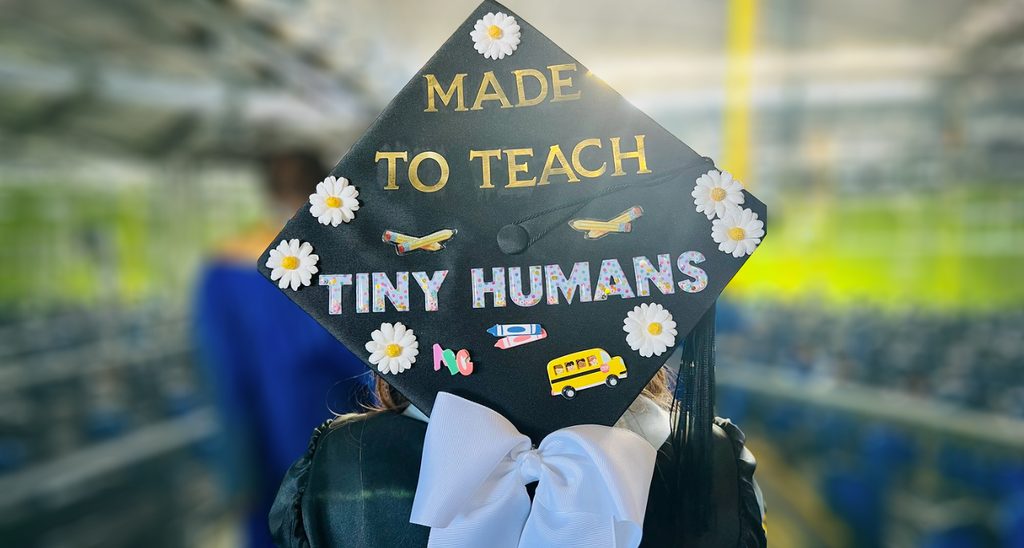
For many early childhood educators, pursuing a degree means fitting higher education around full-time work, family responsibilities, and years of experience already gained in classrooms and communities. For multilingual educators, it can mean navigating all these dynamics while learning in a language other than the one in which they know their work best. North Seattle College is working to change that.
Support from the Early Educator Investment Collaborative, a group of national funders including the Bezos Family Foundation, is strengthening North Seattle College’s Early Childhood Education program. It includes pathways designed for working educators, including classes taught in multiple languages.
Today, the college lists classes in Somali, Arabic, Spanish, and Oromo for students with limited English proficiency. Courses are offered virtually, often during evenings and weekends, and students can move through stackable certificates. The approach starts with a simple idea: Expanding access to a degree that shouldn’t require educators to set aside the wisdom, collective knowledge, and lived experience they already possess.
Creating pathways around educators
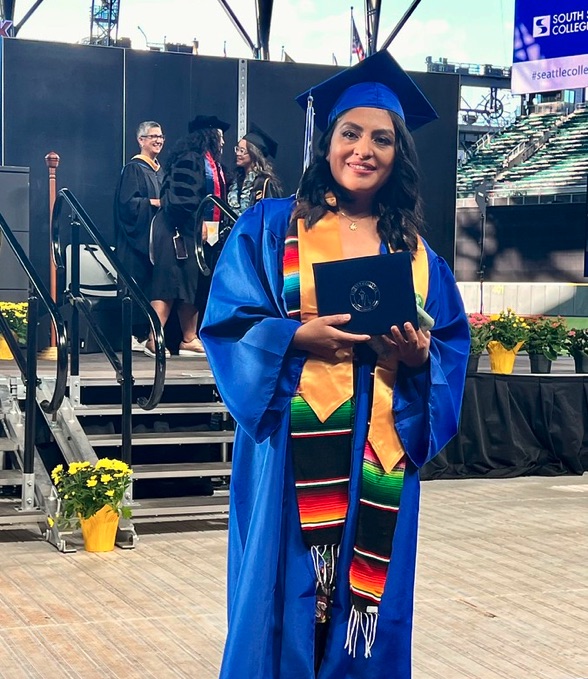
Many students arrive at North Seattle College with significant experience caring for and teaching young children. The program is designed to recognize that experience while creating opportunities for educators to build upon it. North Seattle College faculty member Muna Houssen knows this journey from several vantage points. She began helping with her mother’s family childcare program as a teenager, later enrolled in North Seattle College’s Early Childhood Education BAS program, and has since supported and taught students in multilingual cohorts.
Her experience also gave her an up-close view of the barriers facing experienced providers when new credentialing requirements prompted many to return to college. Some had spent decades caring for children but had little familiarity with the U.S. higher education system. Houssen and others began talking directly with providers about what would help them succeed.
Those conversations helped shape multilingual coursework and supports that could serve as an entry point to higher education. Students could begin with shorter certificates and, if they chose, continue toward additional credentials.
North Seattle College’s broader early childhood education pathways are designed with that progression in mind. Stackable certificates can lead to a 90-credit Associate of Applied Science degree, which can then serve as a stepping stone to a bachelor’s degree in early childhood education. The college also offers prior learning assessments for students who bring significant professional experience or training.
Access means more than translation
For Houssen, getting students into a class was only part of the work. Students also needed support navigating the systems surrounding college, from registration to online learning technology. She described a preparatory course for Somali-speaking students that introduced tools such as Canvas and Zoom before they began certificate coursework. “It wasn’t just like, figure out Canvas, figure out what Zoom is, figure out how to start classes,” Houssen said. “They had a baseline of a class before starting their initial [certificate].”
Faculty and staff continued helping students with advising, registration, and technology questions, often in their home language. That wraparound approach allowed educators to focus more of their energy on what they came to North Seattle College to learn.
Jamileh Almasoud, an instructor in the Arabic cohort, sees the same philosophy reflected inside the classroom. Course information and instructions in her Canvas classes appear in Arabic and English. “Basically, all the information here is in both languages,” Almasoud said while showing one of her courses. “And this goes along for all the courses and classes.”
The distinction is important because language access isn’t simply a convenience. Instead, North Seattle College’s programming meets students where they are, offering instruction in a language they speak proficiently. It opens an opportunity for educators to connect new academic learning with the cultural knowledge and professional experience they already carry into their work.
That continuity can matter for children and families, too, particularly when educators can support young learners in ways that reflect and build on the languages spoken in their homes and communities. For young children, having educators who value and build on home languages matters as well. Research from the University of Washington’s Institute for Learning & Brain Sciences points to benefits of multilingual learning that extend from cognitive flexibility and executive functions to language development and connections with family and culture.
“I feel like we could build a bigger community of professionals if they had opportunities in different [places].”
– Perla Garcia
From students to leaders
Over time, these pathways can create a ripple effect. Students earn credentials, continue their education, support their peers, and become instructors and small business owners themselves. Graduates may also open and operate their own childcare businesses. Perla Garcia made that journey from student to educator and has helped build Spanish-language opportunities for other early childhood professionals. For her, the next opportunity is to bring these pathways even closer to where educators live and work.
“I feel like we could build a bigger community of professionals if they had opportunities in different [places],” Garcia said. “If we had maybe satellite schools … that would be amazing because then you would build a little community there of professionals.” That sense of community can continue well beyond a single course or credential.
Almasoud has watched students in the Arabic cohort move from learners to contributors in the field. Some have begun presenting their own knowledge at professional conferences. “What is really exciting is that some of my students will be presenting at the Arabic Track at the WAEYC conference,” Almasoud said. “They did that last year, and they will be presenting this year as well.” Their experiences point toward a broader goal of educators not only gaining credentials but building confidence, expertise, and professional relationships to share what they know and help shape the field.
Growing a workforce from within communities
North Seattle College’s approach comes amid a longstanding challenge for early childhood education: how to support the continued professionalization of the field and strengthen pathways to credentials and career advancement without creating new obstacles for experienced educators. The National Council for Workforce Education has highlighted North Seattle College’s use of “language-specific on-ramps” leading toward baccalaureate degrees for early childhood professionals whose first language is not English. It has also recognized the ECE BAS program for its work supporting diversity as the field professionalizes. The college’s current ECE program reflects that focus on accessibility. It is designed for students who work full time, with evening, weekend, and virtual options.
The experiences of Houssen, Garcia, and Almasoud show what can happen when institutions start with the strengths already present in communities, then consider what might make higher education more accessible around them. Access, in this case, isn’t simply about making an existing pathway easier to enter. It’s about recognizing the language, experience, and knowledge educators already bring and building a pathway that allows them to carry those strengths forward. And when former students become instructors, mentors, advocates, and presenters themselves, they make the pathway more visible for those coming behind them.