
At TED-Ed, Emerging Technologies Matter in Education
But student voice and skill-building matter more.
As AI expands access to learning in unprecedented ways, navigating its emerging impact on education is both an opportunity and a challenge. For TED-Ed founder Logan Smalley, the priority when engaging with emerging technologies is clear: Students and educators must remain leaders in shaping how technology is used in classrooms and communities, or risk displacing human-centered approaches.
These human stories and ideas are the backbone of TED-Ed’s online library, which includes more than 1,700 animated lessons. Since the project launched in 2012, TED-Ed’s library of 1,700 animations has been viewed over 6 billion times, and by students in nearly every country on earth. Program impact can be seen at scale. A recent series on the adolescent brain, supported by the Bezos Family Foundation, has already reached well over 20 million viewers.
Education technology evolves, with generative AI, VR/AR, interactive video, and learner analytics all part of the landscape. Smalley views these tools with curiosity and care. “If good people don’t engage them, they’ll be shaped by defaults and by voices far removed from the classroom,” he notes. “When a student stands up to share an idea in their own words, the moment is unmistakably human. At TED-Ed, AI might support an animator’s workflow or help a student refine a draft, but it will not replace the artist or the speaker. Skill-building and human-centered voices remain at the heart of the work.”
Rooting Ideas in Local Context
The TED-Ed program Student Talks exemplifies these person-first values, ensuring that young people in every part of the globe — from Cairo to Appalachia — are not just recipients of knowledge but creators and presenters of it. Students select their own topics to present, while educators serve as facilitators, host Student Talks Showcases, and can create YouTube videos to promote talks for consideration by the TED-Ed staff. Ideas take root in local contexts. Whether addressing climate change in a coastal village or food deserts in a crowded city, the program grounds universal ideas in lived experience and student interest.
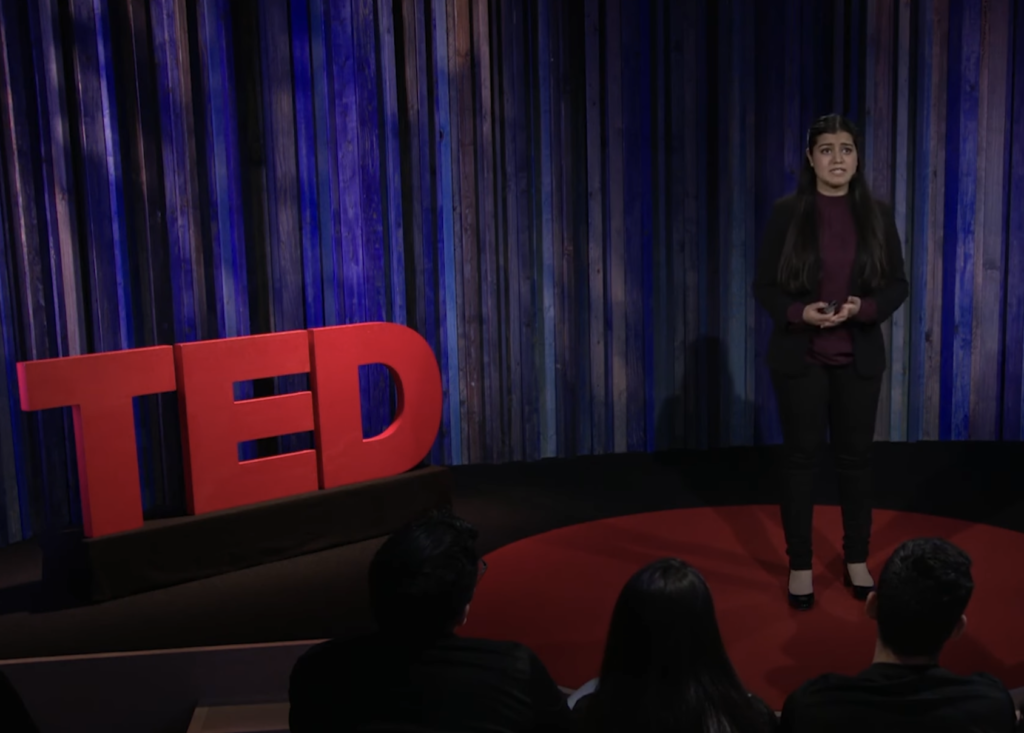
For Ananya Grover, who participated in the program while living in New Delhi, India, that opportunity became a platform for confronting menstrual stigma in her community. She learned how certain issues can remain hidden when we avoid discussing them.
“Researching and presenting on tackling menstrual stigma taught me that ‘taboo’ topics stay that way largely because of silence,” Grover said. “When I overcame my own hesitation of talking about periods so openly, progressing to doing so confidently on a stage and being recorded on a camera, I gave others the space to do the same.”
The impact extended far beyond her community. After sharing her ideas with audiences around the world, Grover realized that menstrual inequity was not just a local challenge but a global one. “It showed me that speaking up, especially as a young person, can inspire people from all walks of life,” she said. Today, she credits the opportunity with helping shape her work as the founder of HealCycle, a venture focused on creating spaces where people feel seen, understood, and safe to engage.
A deeper story is found in individual transformation and outcomes. At the ten-year mark of the Student Talks program, TED-Ed team members interviewed alumni now in college or the workforce. They traced early skills — public speaking, research, confidence — back to their first TED-Ed Student Talk. For many, that experience shaped scholarship essays, opened career doors, or instilled a sense of agency.
Jaleah Colbert, now a junior at Jackson State University, traces much of her confidence back to her TED-Ed experience in 2016. Her talk focused on a lifelong passion for filmmaking and storytelling, but the process ultimately helped her discover something equally important: the value of her own perspective.
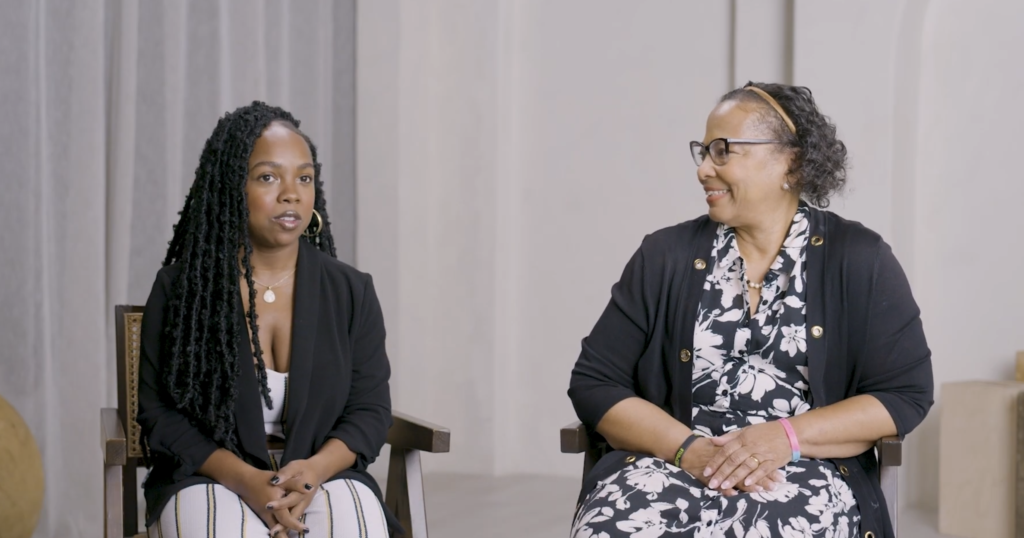
“Creating that talk helped me realize that my voice is actually worthy of being heard by an audience, not just through the stories I capture, but through my own perspective too,” Colbert said. “Stepping out of my comfort zone showed me that growth really comes from putting yourself out there.”
At the time, Colbert doubted her public speaking abilities and nearly talked herself out of the opportunity. Instead, she embraced the challenge, which led to her first plane trip and her first visit to New York to deliver her talk. The opportunity continues to influence how she approaches college, leadership, and personal growth.
“That early experience taught me that stepping out of my comfort zone can open so many doors,” Colbert said. “Having ‘TED-Ed speaker’ on my resume has opened so many opportunities, and it completely shifted the direction of my path by helping me see what I’m capable of when I choose to bet on myself.”
Looking Ahead
TED-Ed is working to amplify student knowledge while pursuing a focused goal: Within five years, the team aims to ensure every community—rural and urban, well-resourced and under-resourced—has the means to elevate its own ideas and insights on topics of local and global significance.
Because when curiosity takes root, it changes how learners see themselves, connect to the world around them, and exchange ideas. In an era of profound advancement in the science of learning, access to sharing big ideas helps young people see the world and their place in its possibilities.
Bezos Family Foundation is proud to support the programs of TED-Ed: TED-Ed Student Talks, TED-Ed Educator Talks, TED-Ed Animated Lessons, and TED-Ed Lesson Dubbing into multiple languages.