
Announcing Dr. William (Bill) Hite as the New President of the Bezos Family Foundation
Dr. Hite shares his leadership journey, career, and what he's looking forward to in the role.
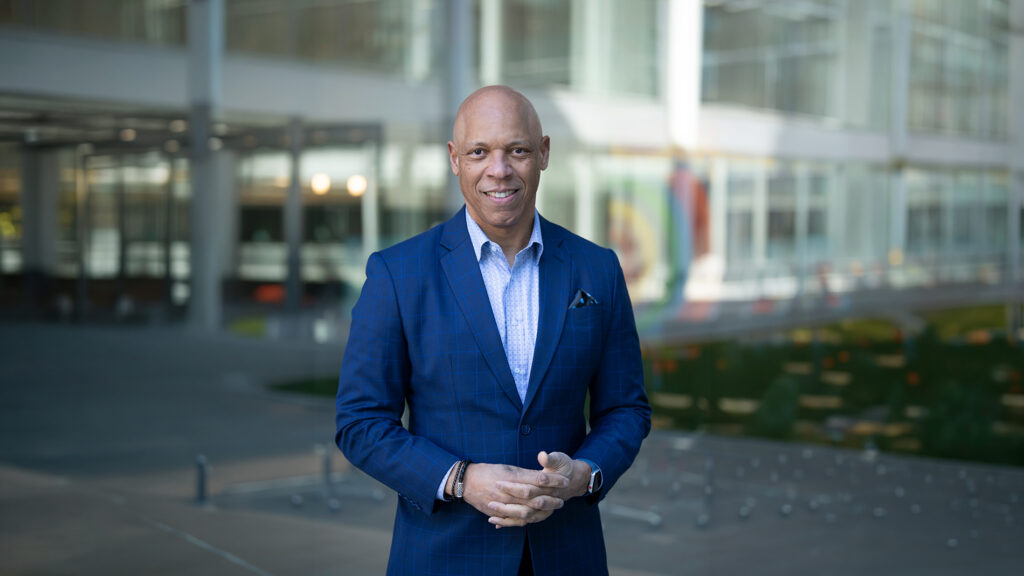
Bill’s decades of experience and leadership in public education reflect the core principles that guide our work: a deep understanding of how young people learn, the importance of research in informing practice and policy, and a commitment to working in partnership with communities to support the well-being and full potential of every young person.
From his early days as a public school teacher and principal, to his decade-long tenure as Superintendent of the School District of Philadelphia, Bill has focused on expanding opportunity and improving learning for young people, especially those from underserved communities. He comes to the Foundation from his role as President and CEO of KnowledgeWorks, where he has been working to help education systems evolve to better meet the needs of today’s learners. He will remain in that role through June.
Bill shares our belief that learning happens across relationships, environments, and experiences, and that every young person deserves the opportunity to shape their path in life. His arrival marks an important next chapter as we build on our momentum and continue our work alongside partners across the field.
As Bill prepares to step into this role in mid-July, we invited him to share more about his journey, his values, and what excites him about the work ahead.
Six Questions for Dr. Bill Hite
You’ve spent your career in education. Can you share a bit more about your leadership journey and what has shaped your commitment to this work?
My leadership has been shaped by a few defining experiences. Early on, someone saw potential in me that I didn’t yet see in myself. That stayed with me and has influenced how I try to show up for others: seeing possibility in people, even when they may not yet recognize it themselves.
Later, working in different communities, I came to more deeply understand that all families want the same things for their children: opportunity, dignity, and success. What often differs is access. That experience reinforced for me that equity of opportunity is not abstract. It’s about understanding people’s lived experiences and responding to them in real ways.
Over time, I’ve also learned that leadership isn’t about carrying the work alone. The strongest work happens in community with others. That continues to shape how I lead and how I listen.
“Leadership isn’t about carrying the work alone. The strongest work happens in community.”
– Dr. Bill Hite
As you look ahead to your role as president of the Bezos Family Foundation, what are you most excited about?
What draws me to the Bezos Family Foundation is the care, intention, and seriousness with which the team approaches learning. They are grounded in science and honor the relationships and environments that make learning possible, with a focus on the earliest years and adolescence, where the evidence shows the greatest opportunities for impact.
I’ve spent my career leading complex public systems, from urban education to national work to multi-state efforts, where the work often moves in shorter cycles. The Foundation has the opportunity to take a longer view—to invest in research gaps, connect that knowledge to practice, and amplify what works so that it can reach young people, families, educators, and communities. That ability to stay focused on what matters over time is what excites me most, along with our shared belief that how young people learn shapes who they become, and that the earlier we invest wisely, the more durable the impact.
How do you envision your past experiences informing the work you’ll lead at the Foundation?
One of the lessons I have learned from leading large organizations is that resources are always limited relative to the problem. That forces clarity about where your attention can actually have the greatest impact.
A smaller team benefits from that same discipline. At the Foundation, that means being intentional about what we do and don’t do, how we partner, and where we can make a difference. My experience helps me understand how systems actually change. Philanthropy has a unique opportunity to support innovation, build evidence, and move ideas into practice and policy at key leverage points. My experience helps identify where those leverage points are.
Partnership has always been central to our approach. How do you think about the role of community and partnership in driving lasting and meaningful change?
Partnership is essential. The people closest to young people—families, educators, communities—bring insight that you just can’t replicate from the outside. As do young people themselves.
What stands out to me about the Foundation is not just what they fund, but how they show up — listening, learning, and building alongside researchers, educators, caregivers, and communities, with deep respect for the essential insights held by those closest to young people. That combination of humility, scientific rigor and an unfailing belief in young people is rare in philanthropy, and it’s powerful.
Can you tell me more about your passion for expanding equitable opportunities for all young people? What motivates you to do this work?
I firmly believe a child’s learning environment significantly influences their future. Every child, regardless of economic background, geographical location, demographic characteristics, language proficiency, or physical abilities, should have access to the support, investments, and opportunities to proven education practices that empower them to pursue their aspirations.
What keeps you hopeful about the future for young people today?
The science of learning is one place. We know more than ever about early development, adolescent growth, and the conditions young people need to thrive. What gives me hope is the opportunity to take what we know and work collaboratively to put it into practice, not just in journals but in homes, classrooms, communities, and the everyday moments where learning happens. When that happens, we can create stronger conditions for young people to grow and succeed. Young people deserve that, and I believe we can deliver it.