Geaux Far Louisiana: Families Leading Early Childhood Systems Change
Building an Early Childhood System Rooted in Community
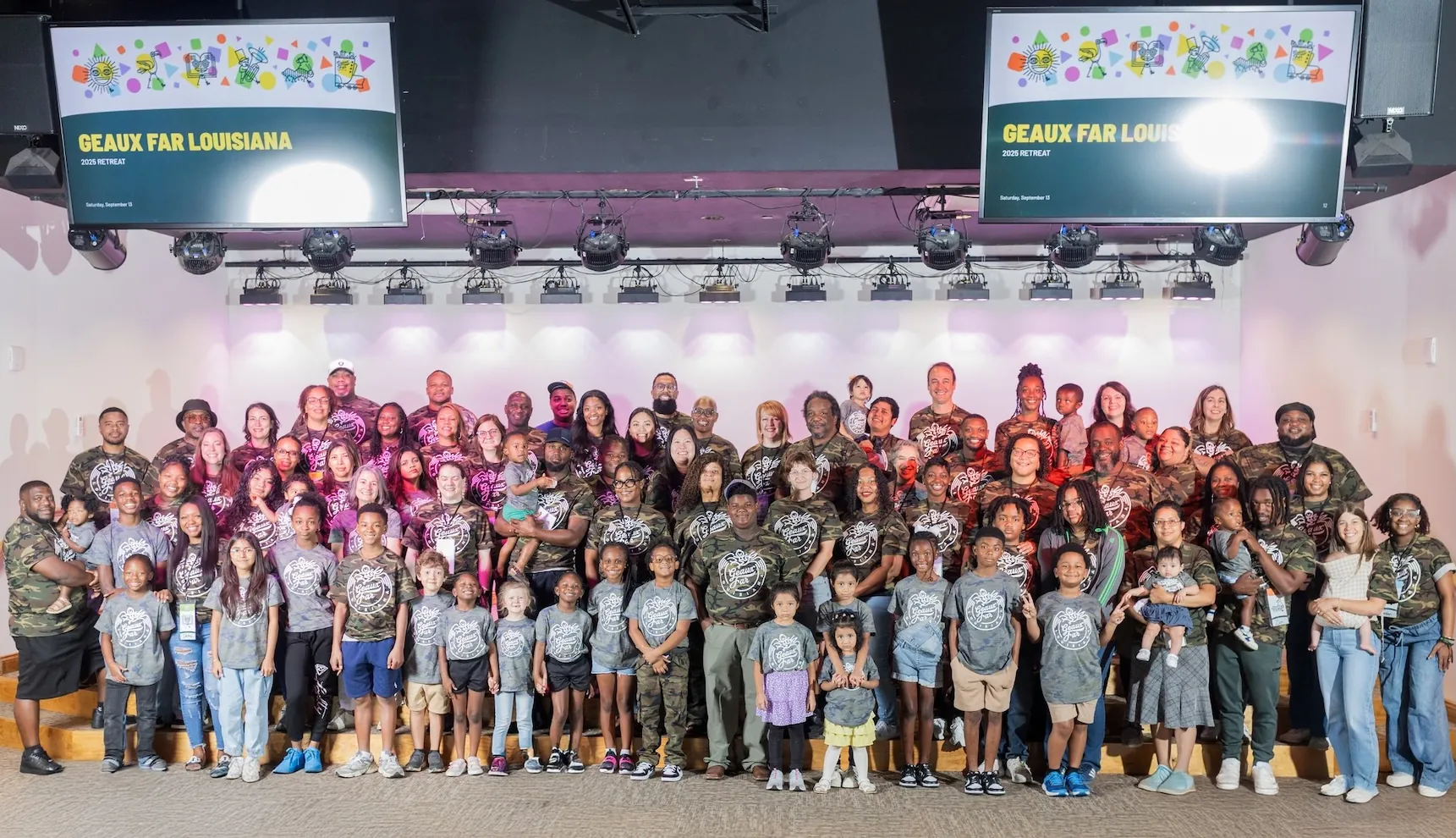
In fall 2025, Geaux Far Louisiana brought parents, providers, policy leaders, and advocates together for a two-day annual retreat that energized their shared mission. Across backgrounds and regions, participants delved into challenging questions, shared insights, and moved toward a bolder vision for the state’s children, setting the course for the next phase of their work with renewed clarity and momentum.
The retreat’s spirit was energetic, open, and deeply human. The retreat began with a shared pause, inviting everyone to reconnect with the purpose that brought them there. Some drew from the realities of raising a child in today’s early childhood education landscape; others from the challenges of running a program or from the reality of a system that hadn’t met their family’s needs. Together, those personal motivations set a powerful tone for the work ahead.
Susan East Nelson, Executive Director of the Louisiana Partnership for Children and Families, shared the “why” of her work with Geaux Far, “I never got to meet either of my children. I lost them before I was able to give birth. And… the hardest thing about that is the possibility. You’ve lost the possibility,” she said. “I want that possibility for every child in Louisiana—where everyone is glad they’re here, welcome, and have everything they need to get a good start.” Stories like Nelson’s grounded the retreat in purpose, ensuring the coalition’s strategy stayed connected to lived experience.
Geaux Far Louisiana is reimagining the state’s early childhood system by putting the people closest to the work—families, educators, health providers, and community advocates—at the center of decision-making. An initiative of the Louisiana Policy Institute for Children (LPIC) and led by co-chairs Libbie Sonnier and Rochelle Wilcox of Wilcox Academy of Early learning, the coalition aims to build an equitable, connected system where every child and family has the chance to thrive.
Its goals span what families say they need most: a seamless network of services, stronger mental and physical health supports from pregnancy onward, affordable quality early education, and workplaces that recognize the realities of raising young children. The coalition’s work is rooted in Louisiana’s particular context—a conservative, high-poverty state deeply reliant on federal funding—but leaders believe the principles are adaptable anywhere.
Shared Leadership at the Core
What truly distinguishes Geaux Far is its culture of shared leadership. More than half of its 36-member steering committee are parents and early childhood providers—people who live the consequences of policy choices every day. That balance reshapes how conversations unfold and where decisions land. As consultant Harriet Dichter noted, “Everyone is here as equals. The way everyone participates, the way the work happens, is not hierarchical.”
That ethos shows up in the smallest gestures, like giving T-shirts not only to adults but to the children and babies who came with them—signals that everyone in the community belongs. “It wasn’t for show—every member of the community got a shirt,” said Lis Stevens of the Bezos Family Foundation.
By centering those most affected, the coalition has built trust, surfaced solutions grounded in experience, and accelerated momentum behind policy ideas that once felt out of reach. As Mattilyn Karst Batson of the Louisiana Policy Institute for Children put it, “The most transferable part of all this is really centering parent and provider voices and having them be the decision makers, while all the grass-tops people in the room are learning and supporting them.”
Since its launch in 2021, Geaux Far has grown from community planning to statewide action. The structure is simple, but its impact is profound: shared leadership has helped Geaux Far build a clearer picture of what families need, a stronger coalition to advocate for it, and a growing sense of what’s possible for Louisiana’s youngest children.
“I don’t think it’s about replicating the exact model. We built this based on the particular people and connections, and from day one, we have said: We are learning as we go,” noted Dichter. Some lessons apply well beyond the state and many of the coalition’s core principals are transferrable across various political or geographical lines, including centering parents and providers as decision-makers; creating space for conflict and working through it constructively; building regular practices of connection—like monthly check-ins and annual convenings, and grounding strategy in data, such as provider surveys documenting wages, staffing shortages, and long waitlists.
The Urgency of Now
While the need is clear and the lessons are scalable, the challenges to the coalition are stark: most early educators in Louisiana earn under $30,000 annually, and many lack health insurance or retirement benefits. Nearly half of providers cite low wages as a barrier to hiring and retention, driving long waitlists—especially for infant and toddler care. As one provider explained through the coalition’s survey, the gap is not one of interest or willingness, but rather resources: small amounts of additional funding could make a transformative difference.

In 2025, the Louisiana legislature formally recognized April 15 as Geaux Far Day, underscoring the coalition’s impact. Leaders continue to mobilize, evaluate progress, and advocate for systemic reform. In addition, last May, the group hosted Dad’s Day at the Capitol in conjunction with A Day Without Child Care, with more than 1,000 participants gathering at the state capital during the legislative session. The team is currently preparing for Geaux Far Week in January and the legislative session beginning in March of 2026.
Geaux Far Louisiana demonstrates what is possible when states take a community-centered approach: building systems with, not just for, families and providers. It is not a model to be copied wholesale, but an example of how equity, humility, and persistence can guide change.
“People in this room are the pioneers for early childhood education and services for children and families,” said Marcus Thomas, Director of Early Childhood Systems for the Governor’s Office. “They are doing vital work that makes sure the future of Louisiana looks bright—and the future of this country looks bright.”